Begin at the actual arrival point
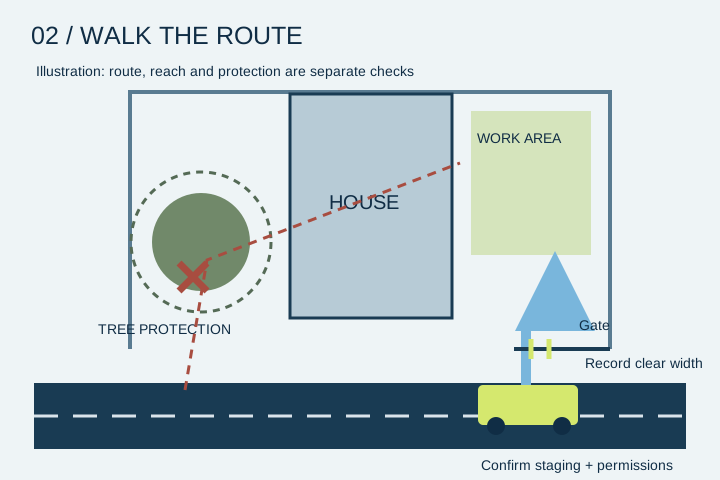
Mark the proposed arrival and staging position on the site sketch. Then trace the route to every treatment zone. Photograph the entrance, changes in direction and the final work area. Ask the actual operator what information they need to assess equipment, hose reach and application access. Do not infer suitability from a vehicle photograph or another property's setup.
Record whether the proposed staging position is on private land or involves a public street, lane or right of way. Identify the person who will confirm permissions and operating conditions. A convenient parking space in a site photograph is not evidence that it can be reserved, occupied or used for project equipment.
Measure the constraints people can miss
Gate width is one useful input. Also note hinges, latches, tight turns, overhead obstructions, stairs, uneven surfaces and the path between structures. Record the clear opening actually available when the gate is open. Do not assume an overall fence opening equals usable clearance. Mark obstacles that are temporary and those that must remain.
Discuss whether the work can be reached without crossing newly prepared or seeded ground. Keep equipment access and a hose route as separate lines. A hose may still cross a public path, sharp corner or protected surface. The operator needs to confirm a practical arrangement; this guide gives no universal reach, clearance or equipment dimensions.
Protect what the route passes
Show retained planting, tree areas, drainage features and surfaces that could be disturbed. Do not assume the shortest route is the appropriate one. Identify buried utilities before excavation or other ground disturbance, and have the responsible person confirm the required locate and protection process. Keep service covers and equipment access points visible on the sketch.
The City's tree protection guidance requires a protection plan for construction or development activities within six metres of a public tree. Determine whether public trees or City land are involved before choosing staging or access. Private-tree concerns still need suitable assessment; a public-tree rule is not a blanket specification for every tree on a site.
Coordinate the route with the work sequence
List the other activities using the same entrance: soil delivery, fencing, irrigation work, inspections and remaining construction. Ask which tasks must finish before surface preparation and which could disturb it afterward. Agree on the route for each phase. A path that was available during the estimate may disappear when a fence or bed is completed.
Calgary's Contractor Environmental Responsibilities Package addresses site management, soil, utilities and tree protection for City construction work. On a project where that package applies, confirm how the access plan relates to those obligations. Do not treat it as a substitute for the requirements of a private contract.
Include the homeowner or site contact in the route walk. They may know about a gate that cannot remain open, a shared path that must stay usable or an area scheduled for another trade. Add those constraints to the sketch rather than leaving them as verbal side notes. Resolve conflicts before the operator brings equipment to the property.
Leave a route decision somebody can act on
Prepare a short record with the arrival point, measured constraints, proposed route, protected areas and permission questions. Name the person responsible for confirming each unresolved item. Keep operator confirmation separate from the owner's wish to use a particular entrance. If conditions change, pause and review the route rather than improvising through an excluded area.
Include the route photographs with your HAUSE project request. Link them to the treatment zones described in the boundary sheet. The aim is a workable, agreed path from arrival to application, with protection and care responsibilities visible throughout.
Put the note to work
Record the relevant observations, documents and unanswered questions in your project brief.
Prepare your request ↗