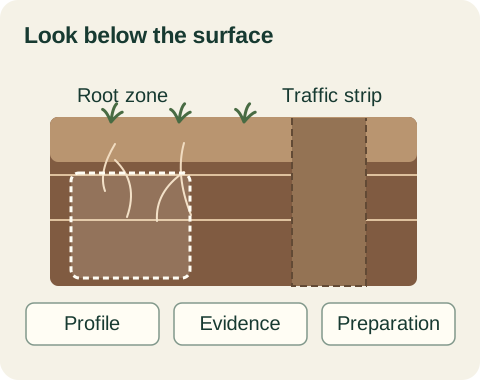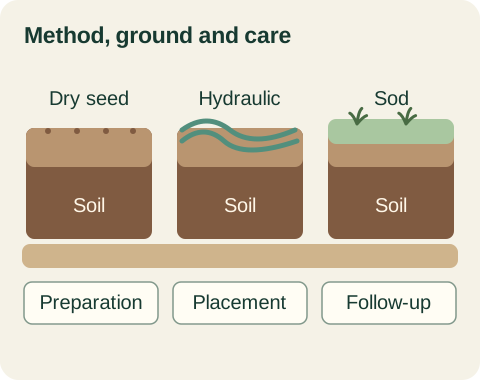
A newly treated site can look promising while still lacking the conditions needed for its intended vegetation. Choosing an installation method is therefore only one part of the decision. Write down what the area must do, how the ground will be prepared and who can care for it afterward. That brief helps you compare hydroseeding, dry seeding and sod on the work and responsibilities each option actually includes.
Begin with the intended landscape
Describe the purpose in everyday terms. A children's play area, a rarely visited acreage edge and a disturbed construction slope have different expectations. Record expected traffic, mowing access, appearance, seasonal use and the acceptable period before normal activity resumes. If those expectations conflict, divide the site into zones instead of forcing one treatment across every area.
The City of Calgary's seed guidance identifies moisture, fertility, light and traffic as selection factors. Its lawn-alternative resources also support considering other groundcovers. Those sources do not select a product for your property. A useful first question is whether maintained turf is the right vegetation at all; the application choice follows that answer.
Understand what the methods deliver
In a hydraulic application, seed and specified carrier materials are placed through an application system. Ask what the actual mix contains and whether seed, mulch, tackifier or amendments are applied together or in separate passes. The word hydroseeding alone does not identify those products, their rates, the treatment thickness or its suitability for a particular erosion condition.
Dry seeding can involve different placement methods, while sod places an already grown vegetation layer. Compare the proposed method in its actual form. A carefully specified dry-seeding plan cannot be evaluated against an undefined hydraulic package; neither can a sod supply price be evaluated as if it included every soil correction and follow-up visit.
Compare access and disturbance
Draw the route from the staging location to the treatment area. Mark gates, stairs, retaining walls, overhead obstructions and surfaces that must be protected. Ask the contractor how equipment, hoses or delivered sod will reach each zone. Confirm who supplies water or other resources, what access permissions are needed and where cleanup will take place.
Consider the sequence of remaining work as well. A seeded area that becomes the route for later fencing or construction may need a different installation date or protection plan. Identify the final heavy-traffic operation before treatment, and create a separate route for establishment inspections. These are coordination choices that can change the practicality of otherwise suitable methods.
Examine the care the household can provide
Installation does not establish a permanent care capacity. Determine who will observe the site, adjust permitted watering, identify runoff and contact the responsible person when a problem develops. A household away for an extended period needs a named arrangement rather than a printed schedule nobody can carry out. Confirm local water rules before relying on any irrigation plan.
Ask for care instructions linked to the actual seed and product specification. Discuss how the instructions will change with observed moisture, weather and growth. A fixed number of sprinkler minutes lacks meaning without application output and site information. Keep legal permissions, field observations and project instructions together so the person caring for the area can make an informed adjustment.
Treat erosion protection as a separate design question
Where sediment could reach a street, ditch or waterbody, ask who assesses the risk and specifies protection during establishment. The Calgary ESC specifications distinguish maintaining surface protection from the later growth of vegetation. A hydraulic treatment should be described within that protection sequence rather than assumed to solve concentrated runoff or every slope condition on its own.
For example, an owner comparing methods for a bank above a driveway should disclose the uphill contributing area and any visible channels. The practical next step may be a drainage or erosion review before selecting seed placement. Changing the application method without addressing the flow pathway can leave the principal uncertainty unresolved.
Compare the complete lifecycle scope
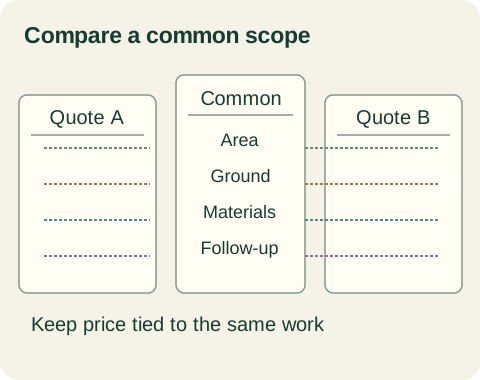
Prepare a comparison sheet with separate rows for preparation, materials, placement, protection, establishment care, inspections and repairs. State which items are fixed, provisional or excluded. Ask how changes are authorized and how the measured area will be checked. Keep proposed products and seed records attached, so the price remains connected to an identifiable scope.
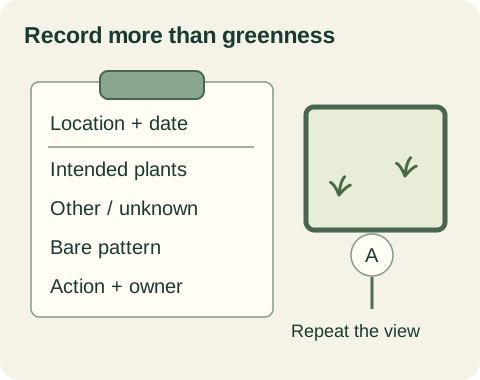
Define the review process before signing. A visit to confirm application coverage is different from a later establishment review. Ask what evidence supports each step, who decides whether repairs are required and which causes or responsibilities affect any warranty. Do not assume the colour of a newly applied carrier, immediate green appearance or a supplier's general promise defines acceptance.
Work through a decision example
Imagine a 240 m² yard with one shaded corner, an active dog route and a future patio extension. The owner sketches the future exclusion and decides to protect the main lawn from traffic while keeping a temporary path. Three estimators receive the same boundary, ground-readiness information and care responsibility. Each can now explain whether its method is suitable and what still needs confirmation.
The decision is documented as a project plan: vegetation objective, agreed preparation, actual method, access route, named caregiver and review criteria. If timing or household care makes the plan impractical, adjust the sequence or landscape design before installation. A method chosen with those details resolved is easier to manage than a treatment selected primarily from a photograph.
Sources + further reading
- City of Calgary: Seeding
- City of Calgary: Lawn alternatives and groundcovers
- City of Calgary: 2022 ESC standard specifications
Source review: 2026-10-04. Requirements and programs can change; confirm the current details with the authority or provider.